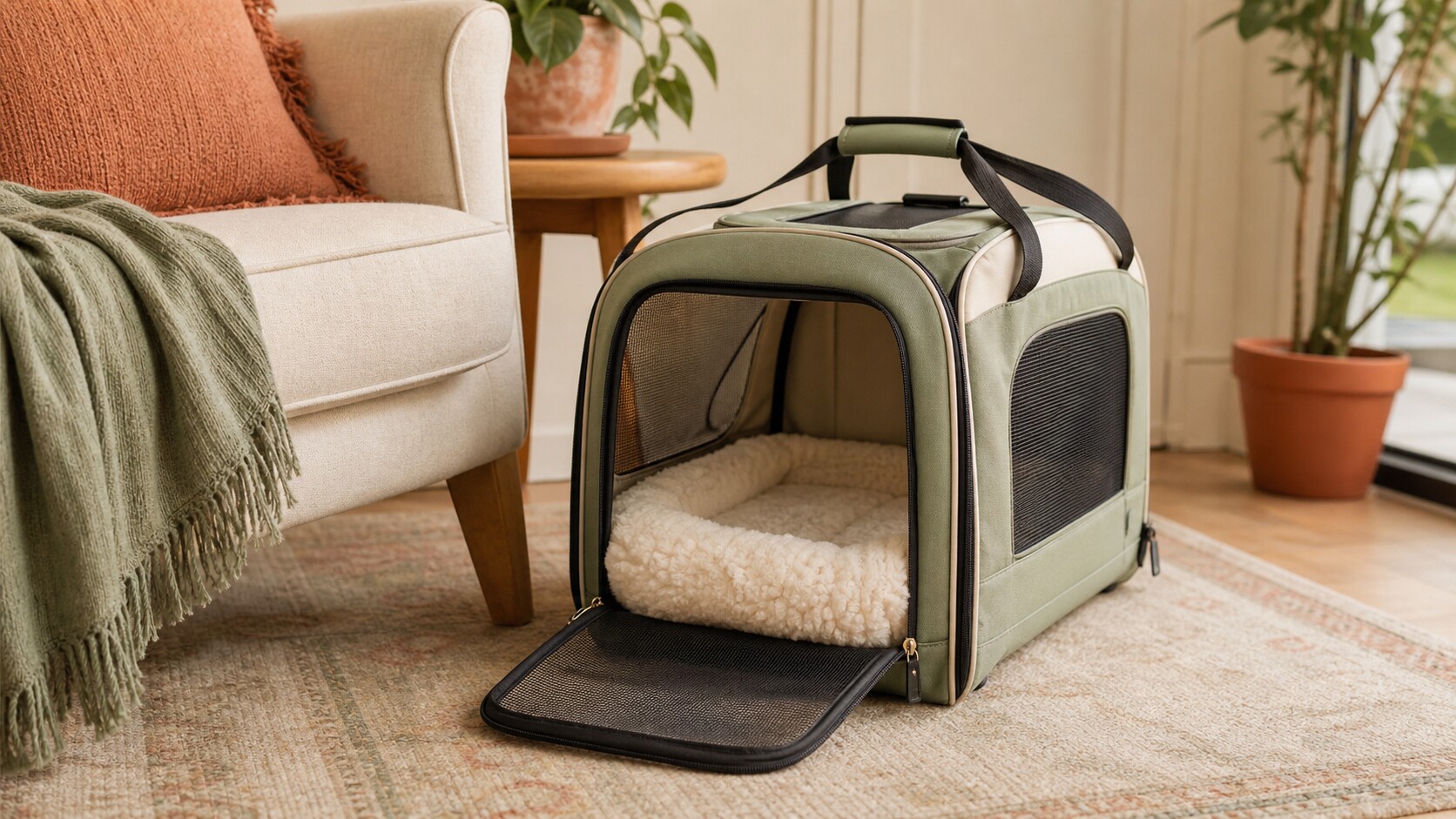
A carrier that works for a ten-minute drive to the vet isn’t always the right one for a cross-country flight, and the reverse is true too — a rigid airline-compliant carrier can feel like overkill for a cat that just needs a calm, enclosed box twice a year. The right pick depends mostly on frequency of use and whether air travel is involved, since airlines enforce specific under-seat dimensions that most everyday carriers don’t meet.
What actually matters in a carrier
- Top and front entry points — a carrier that opens from the top makes it dramatically easier to get a reluctant cat in and out, especially at the vet
- Ventilation on multiple sides — mesh panels on more than one side keep airflow moving and let a stressed cat see out, which tends to reduce anxiety
- Airline compliance (if flying) — under-seat carriers have to meet specific dimensions set by each airline; check the airline’s own page, not just the carrier’s marketing
- A stable, semi-rigid base — a carrier that collapses or sags underneath makes a cat feel less secure than one with a firm bottom panel
Comparison at a glance
| Carrier | Type | Best for | Airline compliant | Price range |
|---|---|---|---|---|
| Sleepypod Air | Soft-sided, expandable | Frequent flyers | Yes (most major US carriers) | $$$$ |
| Petmate Two-Door Top Load | Hard-sided | Vet visits, car travel | No | $$ |
| Diggs Passenger | Soft-sided, collapsible | Everyday carry + occasional travel | Check per-airline | $$$ |
| Petsfit Expandable Carrier | Soft-sided, expandable | Longer car trips, exam room comfort | No | $$ |
(Prices reflect general market positioning at time of writing — check current retailer listings for exact figures.)
Sleepypod Air
The Sleepypod Air is one of the most frequently recommended carriers specifically for cats that fly, largely because it’s designed around actual under-seat dimensions rather than retrofitted to fit them. It also expands at the ends mid-flight to give a little extra room once through security, which is a detail owners who fly regularly with a cat tend to value highly. It’s a premium price point, but for anyone flying more than once or twice a year, it’s a carrier that’s built to last multiple trips.
Petmate Two-Door Top Load
For the much more common case — routine vet visits and car rides — a hard-sided, two-door carrier remains the most practical option. Top-loading access solves the single biggest frustration of vet-visit carriers: getting a nervous cat inside without a struggle at the front door. The rigid shell also holds up better to being set on an exam room floor or table without flexing.
Diggs Passenger
The Diggs Passenger sits in between the two use cases above — a soft-sided carrier with a collapsible frame that folds flat for storage, but sturdy enough that many owners use it for both everyday vet trips and the occasional flight (airline compliance should be double-checked against the specific airline, since requirements vary). Its multiple mesh panels and top-entry zipper make it a strong general-purpose pick for someone who doesn’t want to own two separate carriers.
Petsfit Expandable Carrier
For longer car trips — moving, a multi-hour drive to a new vet, or a weekend away — an expandable soft carrier that unzips into a slightly larger footprint at rest stops gives a cat a bit more room to reposition without needing a full crate. It’s not built for air travel, but for road trips it strikes a reasonable balance between portability and in-carrier comfort.
What to skip
- Carriers with only one entry point and no top access — these make vet visits noticeably harder, especially with a cat already stressed by the trip
- Buying an “airline-compliant” carrier without checking the specific airline’s current dimensions — requirements differ by carrier and change periodically
- Backpack-style carriers for cats prone to motion sickness or high anxiety — the swaying motion and lack of a stable base can make travel stress worse rather than better
Bottom line
For occasional vet trips and car rides, a hard-sided, top-loading carrier like the Petmate Two-Door is durable, affordable, and easy to clean. For anyone flying with a cat regularly, an airline-specific carrier like the Sleepypod Air is worth the higher price simply because it’s designed to actually fit under the seat.
This post contains affiliate links. We may earn a commission at no extra cost to you.