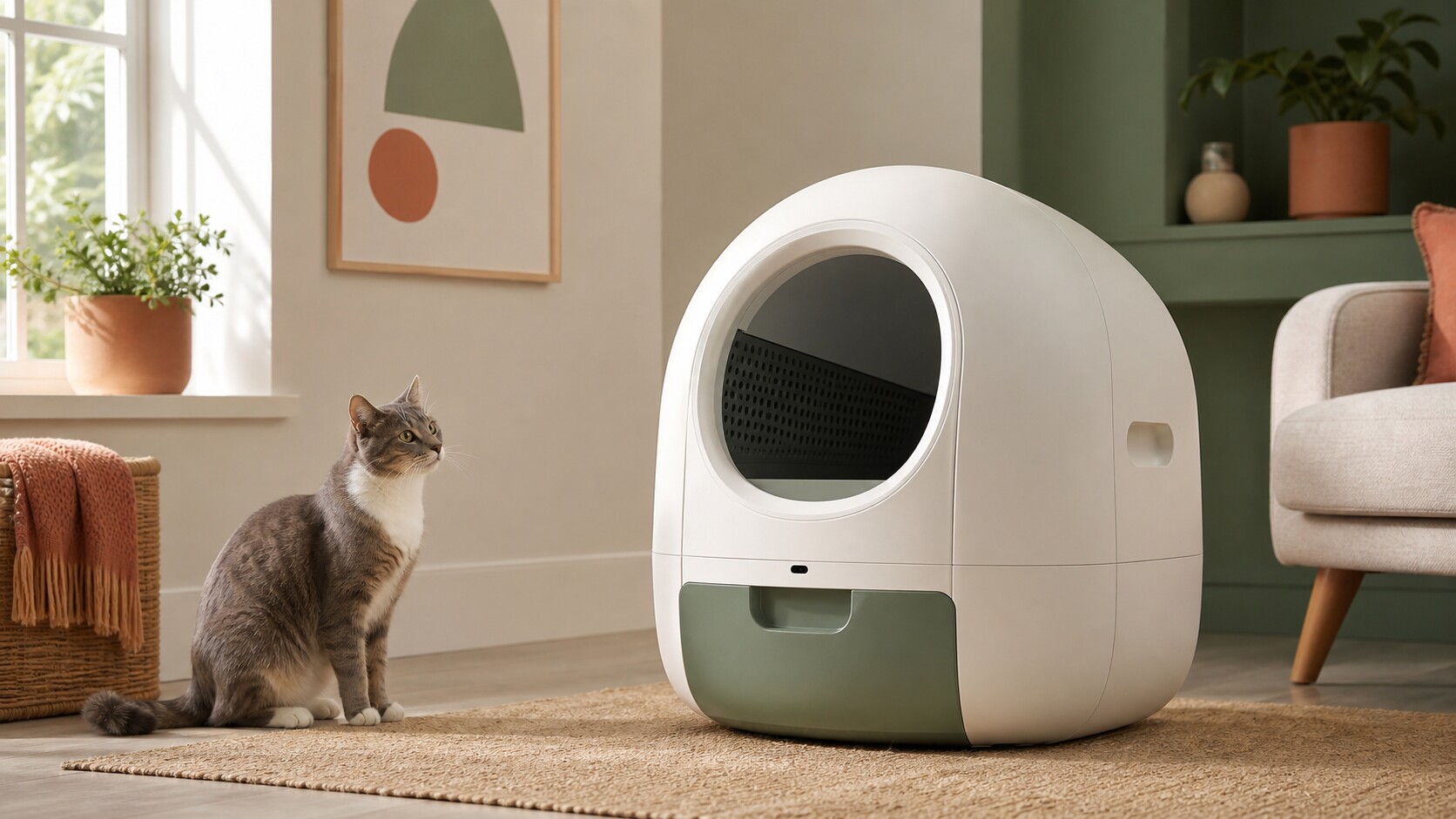
Odor control comes down to three things: how fast waste is separated from clean litter, how well the box seals or filters the air around it, and how often someone actually has to touch it. Boxes that nail all three tend to cost more upfront — but for multi-cat households or small apartments, that upfront cost is usually the cheaper option compared to replacing litter (and goodwill with roommates) every week.
Below is a rundown of the models that consistently show up at the top of odor-control comparisons, grouped by approach rather than price, since the right pick depends more on how many cats you have than on budget alone.
What actually controls odor
- Waste separation speed — self-cleaning boxes that rake or sift waste within minutes of use keep ammonia smell from building up, which matters more than any filter
- Sealed or carbon-filtered enclosures — a lid alone does little; look for active carbon filters or a genuinely sealed waste compartment
- Litter type compatibility — clumping litter with fine granules performs better in raking mechanisms; crystal and pellet litters need different box designs entirely
- Capacity relative to cat count — an undersized box will smell regardless of how advanced it is, since waste sits longer between cleanings
Comparison at a glance
| Model | Type | Best for | Odor control method | Price range |
|---|---|---|---|---|
| Litter-Robot 4 | Self-cleaning, automatic | Multi-cat households | Auto-sift + sealed waste drawer | $$$$ |
| PetSafe ScoopFree Complete | Self-cleaning, crystal litter | Single-cat apartments | Crystal litter + disposable tray | $$$ |
| Modkat XL Enclosed Litter Box | Enclosed, manual | Renters wanting low mess | Top-entry design + carbon filter lid | $$ |
| IRIS USA Top Entry Litter Box | Enclosed, manual | Budget-conscious owners | Sealed lid + built-in odor filter | $ |
(Prices reflect general market positioning at time of writing — check current retailer listings for exact figures.)
Litter-Robot 4
The Litter-Robot line is the name most frequently cited in multi-cat odor-control discussions, and the 4th-generation model addresses the biggest complaint about earlier versions: waste bin capacity. The sealed waste drawer plus automatic sifting cycle means clumps are removed from the litter bed almost immediately after each use, which is the single biggest lever for reducing ammonia smell in a home with more than one cat. It’s a serious investment, and it requires an outlet nearby, but for households running two or more litter boxes it frequently lets owners consolidate down to one unit.
PetSafe ScoopFree Complete
The ScoopFree system swaps traditional clumping litter for crystal litter that absorbs moisture and locks in odor, paired with a disposable tray that gets swapped roughly every 3–4 weeks rather than scooped daily. It’s a strong pick for apartment dwellers who want low day-to-day maintenance without the price tag of a full robotic system, though the ongoing cost of replacement trays is worth factoring into the comparison against traditional litter.
Modkat XL Enclosed Litter Box
For owners who’d rather stick with regular clumping litter and manual scooping but still want meaningfully better containment, top-entry enclosed boxes like the Modkat XL cut down on both smell escape and litter tracking. The top-entry design also has a secondary benefit: it discourages spraying and kicking litter outside the box, which indirectly helps with the “does the room smell” problem since scattered litter dries out and stops trapping odor the way a contained litter bed does.
IRIS USA Top Entry Litter Box
This is the budget entry point for the enclosed, carbon-filtered category — a sealed lid plus a built-in filter that doesn’t rely on any subscription or proprietary litter. It won’t match a self-cleaning system for hands-off convenience, but for a single cat in a studio or one-bedroom, it’s a reasonable middle ground between a fully open box and a $600 robot.
What to skip
- Open, uncovered boxes in small apartments — even frequent scooping can’t offset the lack of any physical barrier between the litter bed and the room’s air
- Scented litters as a substitute for cleaning — masking odor with fragrance tends to combine into a worse smell rather than a neutral one, and some cats avoid heavily scented litter altogether
- Any box sized for one cat being used by two or more — capacity mismatches are one of the most common causes of persistent odor complaints in multi-cat homes
Bottom line
For two or more cats, a self-cleaning system like the Litter-Robot 4 earns back its price in reduced scooping and consistently better odor control. For a single cat in a smaller space, an enclosed manual box with a carbon filter — or a crystal-litter system like ScoopFree — gets most of the same odor benefit at a fraction of the cost.
This post contains affiliate links. We may earn a commission at no extra cost to you.